
Rockchip RK3568 vs RK3588 for Industrial Android SBC Applications
Compare Rockchip RK3568 vs RK3588 for industrial Android SBC applications. Learn how to choose between the two SoCs for HMI panels, smart terminals, gateways, display products, and edge AI devices.
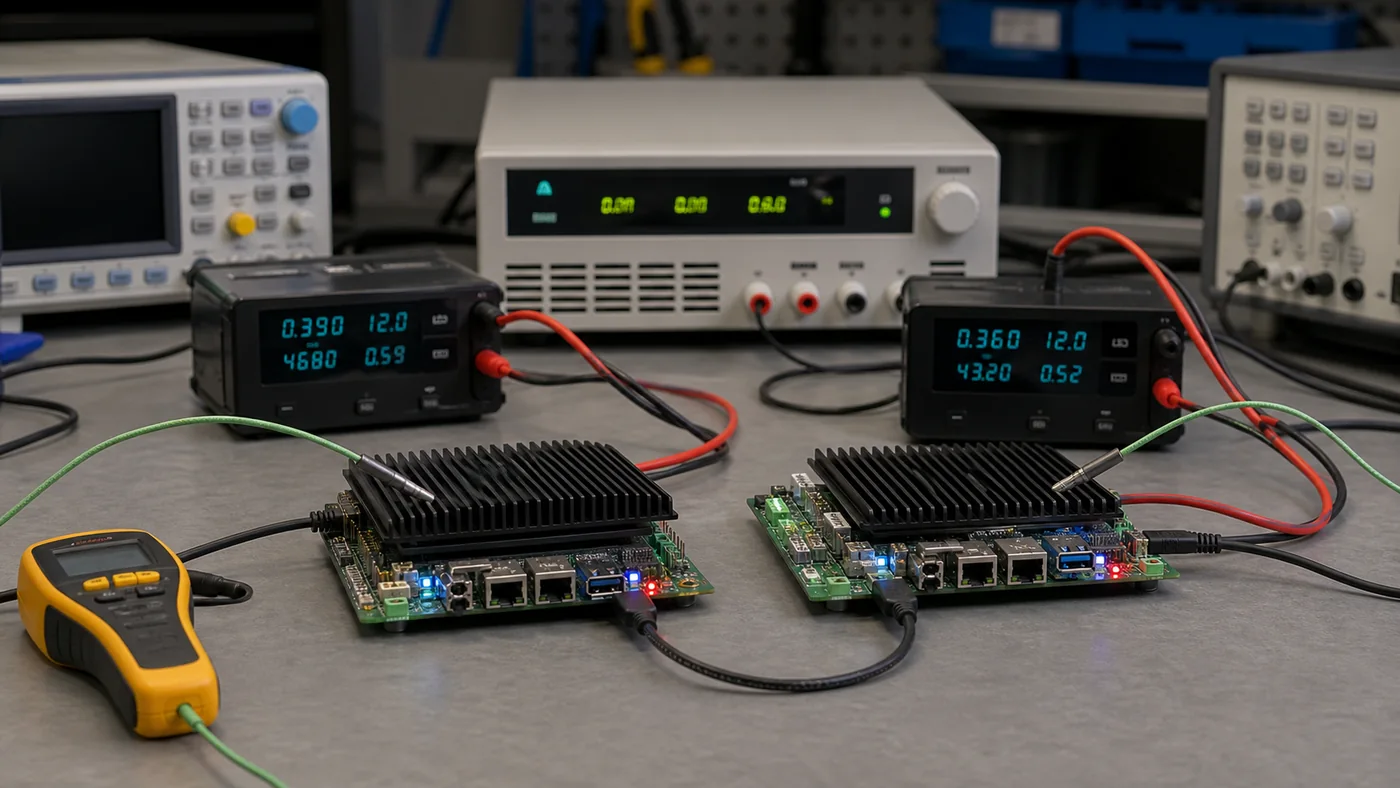
Rockchip RK3568 and RK3588 are both popular choices for Android SBC and embedded Linux products. They appear in industrial HMI panels, smart terminals, gateways, medical interfaces, retail systems, edge devices, and custom embedded boards. Because both are from the same SoC family direction, teams often ask a simple question: should we use RK3568 or RK3588?
The practical answer depends on the product. RK3588 is clearly stronger in performance, graphics, video, AI, and expansion capability. RK3568 is often more cost-effective, easier to cool, and sufficient for many industrial HMI and gateway products. A product team should not choose RK3588 only because it is newer or faster. It should choose it because the product needs the extra capability.
This article compares RK3568 and RK3588 from an industrial Android SBC perspective.
Positioning the Two SoCs
RK3568 is commonly used in mid-range embedded products. It is suitable for Android and Linux SBCs that need a stable ARM platform, display output, Ethernet, USB, serial interfaces, and moderate graphics performance. It works well for many 7-inch and 10.1-inch HMI products, smart home panels, industrial gateways, access control devices, and commercial terminals. An RK3566-class board may already be sufficient for a lighter workload.
RK3588 is a high-performance SoC designed for more demanding applications. It offers stronger CPU cores, much stronger GPU capability, AI acceleration, richer video processing, and more expansion options. It is suitable for high-resolution display systems, multi-display products, edge AI terminals, vision systems, advanced kiosks, digital signage, and heavy Android applications.
The difference is not only speed. The difference affects PCB complexity, power consumption, heat, cost, enclosure design, software workload, and supply planning.
High-Level Comparison
| Area | RK3568 | RK3588 |
|---|---|---|
| Product class | Mid-range embedded | High-performance embedded |
| Typical HMI fit | 7-inch to 10.1-inch panels | 10.1-inch to 4K/multi-display products |
| UI performance | Good for normal Android HMI | Strong for complex UI and graphics |
| AI workload | Limited | Stronger NPU capability |
| Video workload | Moderate | Much stronger multimedia |
| Thermal design | Easier | Requires more planning |
| Cost | Lower | Higher |
| PCB complexity | Lower | Higher |
| Best use | HMI, gateway, smart terminal | AI, multi-display, heavy multimedia |
This table is intentionally practical. A design engineer should evaluate whether the product really needs the second column.
CPU and Application Performance
RK3588 has a much stronger CPU configuration than RK3568. For applications with heavy Java/Kotlin code, browser-based dashboards, local databases, multi-threaded services, image processing, or background communication tasks, RK3588 provides more headroom.
However, many industrial Android HMI applications are not CPU-heavy. A typical machine panel displays status, settings, alarms, charts, and control buttons. It may communicate through RS485, CAN, Ethernet, or MQTT. If the UI is well designed and the display resolution is moderate, RK3568 can provide a smooth experience.
Before choosing RK3588, run a workload test. Use the actual application, real display resolution, communication services, logging, and long-run scenario. If RK3568 keeps CPU load and temperature within acceptable range, the extra RK3588 cost may not be justified.
GPU and Display Requirements
Display requirements are often the deciding factor. RK3568 can drive many common embedded displays, but RK3588 is better for high-resolution, multi-display, and graphics-heavy products.
Choose RK3588 if the product includes:
- 4K display output
- Multiple displays
- Smooth complex animations
- Heavy WebView dashboards
- 3D visualization
- Video wall or digital signage features
- Multi-camera preview
- High-resolution medical or inspection UI
Choose RK3568 if the product uses a single 800 x 480, 1024 x 600, 1280 x 800, or similar embedded display with a conventional HMI UI.
Display interface support still needs board-level confirmation. The SoC capability is only one part. The actual Android SBC must provide the required LVDS, MIPI DSI, HDMI, eDP, or RGB interface, plus a stable panel driver and touch integration. NXP industrial Android platforms approach the same requirements with a different BSP and lifecycle balance.
AI and Vision Workloads
RK3588 is more suitable for AI and vision workloads. If the product needs local object detection, face recognition, camera analytics, defect inspection, multi-camera input, or edge AI inference, RK3588 is usually the better option.
RK3568 can handle light workloads, but it is not the right platform for demanding AI. Trying to force AI features onto a lower-end SoC can lead to high CPU load, heat, slow UI response, and poor user experience.
For industrial products, be realistic about AI requirements. If AI is a future marketing idea but not part of the first product version, RK3568 may still be a better launch platform. If AI is central to the product, start with RK3588 and design the thermal system properly.
Industrial Interfaces
Both RK3568 and RK3588 boards can be designed with industrial interfaces such as RS485, CAN, GPIO, USB, Ethernet, audio, and display outputs. The SoC does not guarantee the final interface set. The board design matters.
For an industrial Android SBC, engineers should verify:
- Number of UARTs exposed
- RS485 transceiver design and direction control
- CAN controller and transceiver support
- Ethernet port count and PHY quality
- GPIO voltage and protection
- USB host stability
- Power input range
- ESD and surge design
- Connector type and cable routing
An RK3568 board with the right industrial interfaces can be more useful than an RK3588 board designed mainly for multimedia. Match the board to the product, not only the SoC.
Thermal Design
Thermal behavior is one of the strongest practical differences. RK3588 can generate significantly more heat under heavy load. In an open development kit, this may be manageable with a heat sink and airflow. In a sealed industrial HMI enclosure, it becomes harder.
RK3568 is easier to use in fanless products. It still requires proper heat spreading, but the thermal margin is usually simpler for compact panels.
For RK3588, thermal design should start early:
- Use a real enclosure during tests.
- Run the actual application workload.
- Test high ambient temperature.
- Measure SoC temperature and enclosure surface temperature.
- Consider heat spreaders or metal back plates.
- Avoid placing heat sources directly behind the LCD hot spots.
If the product does not need RK3588 performance, avoiding unnecessary heat can improve reliability.
Cost and Product Positioning
RK3588-based boards cost more. They may require more complex PCB layout, more power management attention, larger heat sinks, more memory, and more careful validation. For premium products, this can be acceptable. For cost-sensitive HMI panels, it may reduce competitiveness.
RK3568 is often a better fit for products where the value comes from stable HMI operation, display integration, industrial communication, and price-performance balance.
The question is not whether RK3588 is worth more. The question is whether the end customer will pay for the added capability.
Android BSP and Software Support
Both RK3568 and RK3588 require mature BSP support. A powerful SoC is not useful if the Android image is unstable or poorly documented.
Check:
- Android version availability
- Kernel source access
- Device tree configuration
- Display driver support
- Touch driver support
- Hardware video acceleration
- OTA update method
- Serial/CAN/GPIO access from Android
- Recovery tools
- Long-run stability
For production products, BSP maturity is often more important than peak performance.
Practical Selection Scenarios
Use RK3568 for:
- 7-inch or 10.1-inch industrial HMI
- Smart home wall panels
- Access control terminals
- Industrial gateways with local display
- Medical-adjacent touchscreen terminals
- Cost-sensitive Android control panels
- Products with moderate UI and communication needs
Use RK3588 for:
- High-resolution HMI or multi-display products
- Edge AI terminals
- Vision inspection systems
- Digital signage with heavy media
- Advanced kiosks
- Multi-camera products
- Browser-heavy dashboards
- Products requiring long performance headroom
Example Decision Matrix
| Question | If yes, prefer |
|---|---|
| Is the display 4K or multi-screen? | RK3588 |
| Is local AI inference central to the product? | RK3588 |
| Is the UI a normal industrial HMI? | RK3568 |
| Is cost a major factor? | RK3568 |
| Is the enclosure sealed and compact? | RK3568 unless performance requires RK3588 |
| Is heavy video processing required? | RK3588 |
| Is the product a standard control panel? | RK3568 |
Conclusion
RK3568 and RK3588 are both useful Rockchip platforms for industrial Android SBC applications. RK3568 is a strong choice for mainstream HMI, gateway, smart terminal, and connected control products. RK3588 is the better choice when the product needs high performance, multi-display support, AI acceleration, video processing, or large future headroom.
The right decision depends on workload, display resolution, thermal limits, cost target, industrial interfaces, Android BSP support, and product lifecycle. For many industrial products, a well-supported RK3568 SBC can be more practical than an overpowered RK3588 board. A cross-vendor shortlist must account for both the Rockchip and NXP ecosystems and their different fit for industrial Android boards.
Frequently Asked Questions
Is RK3588 always better than RK3568?
RK3588 is much more powerful, but it is not always the better product choice. RK3568 can be more suitable for cost-sensitive industrial HMI, gateways, and control panels that do not need high-end graphics, AI, or multi-display performance.
When should engineers choose RK3588?
Choose RK3588 when the product needs high display resolution, strong GPU performance, AI acceleration, multi-camera processing, heavy browser UI, video workloads, or large performance margin.
When is RK3568 enough?
RK3568 is often enough for 7-inch to 10.1-inch Android HMI panels, smart terminals, industrial gateways, and connected devices with moderate UI complexity and standard I/O requirements.