
RK3576 vs RK3588: Performance, AI, Display, and Cost Compared
Compare RK3576 and RK3588 for edge AI and HMI products using CPU architecture, NPU deployment, display needs, thermal limits, and total platform cost.
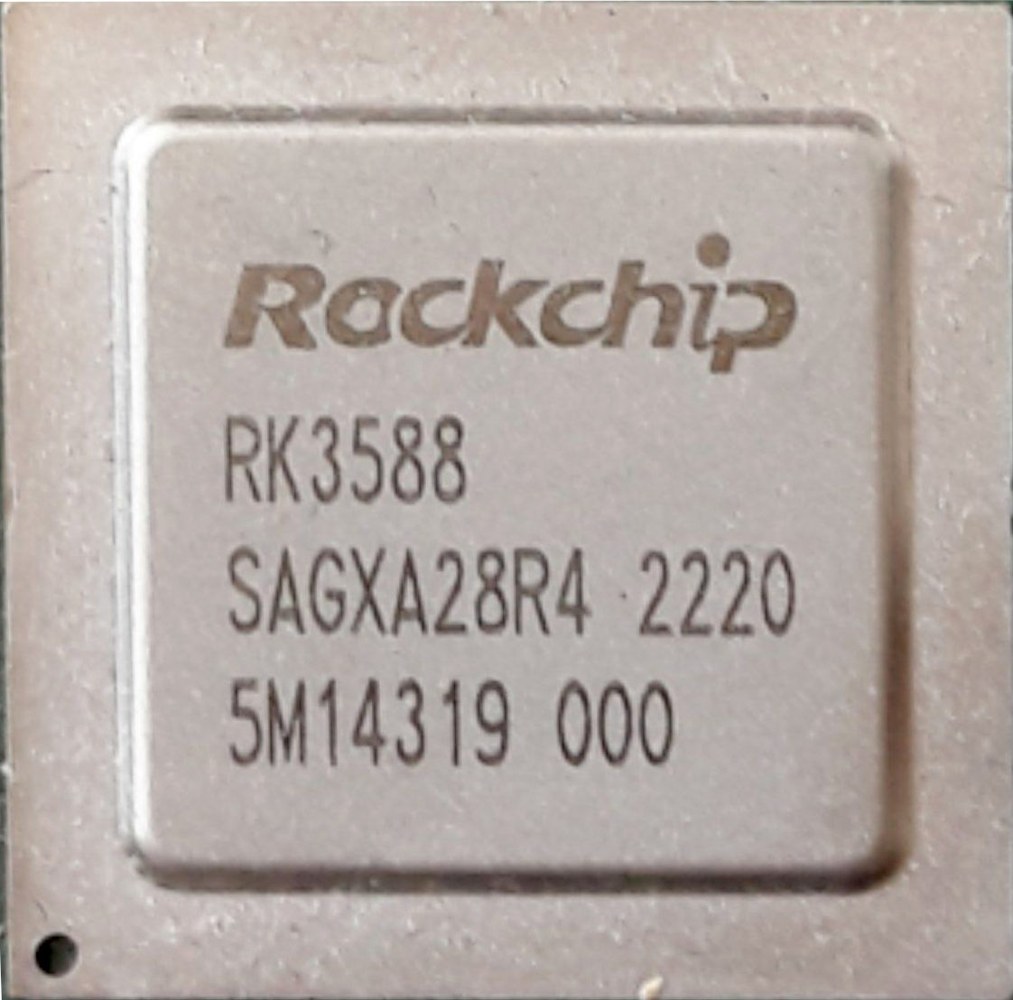
A processor upgrade is useful only if it removes the bottleneck that limits the product. In an RK3576 vs RK3588 comparison, a busy camera pipeline, a richer interface, and additional storage can each point toward a different answer.
RK3576 combines four Cortex-A72 cores with four Cortex-A53 cores. RK3588 combines four Cortex-A76 cores with four Cortex-A55 cores. Both are advertised with a 6-TOPS NPU, but that shared headline does not make their complete application pipelines equivalent.
This guide compares architectural choices and evaluation methods. It does not report board benchmarks, a power measurement, or a guaranteed frame rate. Prices and supported software must be confirmed for the exact board configuration offered by the supplier.
Identify the work that misses its deadline
Separate the application into capture, decoding, preprocessing, inference, postprocessing, display, storage, and communication. Give each stage a latency target and identify the resources it consumes.
For example, a vision HMI may finish inference quickly yet display stale results because frames accumulate before preprocessing. Buying a faster CPU without bounding that queue may improve a benchmark while leaving operator response unpredictable.
Specify both throughput and freshness. A system that processes every frame eventually can be unsuitable when a reject decision must reach an actuator promptly. Measure the age of the result from acquisition to delivery, including dropped frames and communication delays.
A useful comparison runs the same application and dataset on both candidates. Keep the model, input resolution, accuracy target, memory configuration, and software versions visible. Explain any differences rather than calling the two runs equivalent because both boards boot the same distribution.
CPU and memory determine more than synthetic scores
RK3588’s newer CPU architecture makes it a sensible evaluation candidate for demanding host-side processing. RK3576 can still fit a product whose workload spends most of its time in supported accelerators and has limited CPU demand.
That is a selection hypothesis, not a numerical speed claim. Image resizing, encryption, database writes, browser rendering, and unsupported neural-network operations compete for resources in different ways. Their combined behavior matters more than a single CPU score.
Memory bandwidth can limit an application even when several CPU cores appear idle. A pipeline may read the same image repeatedly through capture buffers, format conversion, inference input, and the display compositor. Avoid unnecessary copies before assuming more cores will solve the problem.
Choose RAM capacity from the peak working set and future software allowance. The RK3588 edge AI workflow is especially useful when camera buffers, model allocations, and local recording are active together.
Equal NPU headlines need a careful reading
The RK3576 brief specifies its 6-TOPS INT8 figure with a sparsity footnote. Such conditions matter. A nominal operations rating does not predict how quickly a dense production model will execute, nor whether every operation maps to the accelerator.
Convert the actual model using an SDK version supported by the target platform. Validate its outputs against a reference implementation with representative inputs. A successful conversion is not enough if quantization changes the decisions that matter to the product.
Inspect preprocessing and postprocessing separately. Color conversion, normalization, resizing, non-maximum suppression, and application logic may execute outside the NPU. Their cost can dominate a compact model, particularly when images move between incompatible buffer formats.
Ask for sustained, end-to-end measurements. Include capture and display, not just repeated inference on a tensor already in memory. Report latency distribution, accuracy, memory use, and thermal state beside the measured throughput.
Display and expansion can outweigh compute
Read interface combinations as a resource map. RK3576 provides useful display and networking options, while RK3588 exposes a broader high-speed expansion platform. A supplier board may implement only a subset of either processor’s capabilities.
A multi-screen appliance needs confirmed simultaneous outputs, supported modes, compositor behavior, and panel integration. An interface label such as HDMI does not prove that a particular combination of independent displays works on the offered image.
Storage deserves the same scrutiny. A logging appliance with high data volume may care more about storage topology and write behavior than additional CPU capacity. Check which PCIe, SATA, USB, and display functions share physical resources.
The distinction between RK3588 and RK3588S becomes relevant here. A board sold under the wider RK3588 family name may use a variant with fewer interfaces, so confirm the exact processor marking and schematic.
Build a cost comparison with useful boundaries
Keep the supply requirement separate from average power. A platform that averages comfortably below the adapter rating can still encounter a short voltage dip when storage and peripherals start together. Ask for startup and load-transition checks at the board input, then verify the intended cable and connector. A reset caused by voltage drop can otherwise be misdiagnosed as a thermal or inference-runtime problem.
| Decision variable | Compare on both candidates |
|---|---|
| Application performance | Same workload, input data, and acceptance limits |
| AI deployment | Conversion success, accuracy, runtime compatibility |
| Mechanical design | Cooling assembly, enclosure volume, mounting method |
| Production cost | Board, memory, storage, power conversion, qualification |
| Software ownership | Source delivery, update scope, support response |
Do not compare a minimal RK3576 board with a fully populated RK3588 development kit and attribute the whole price difference to the processor. Normalize RAM, storage, network ports, connector population, and order quantity.
Include engineering work. A platform with an existing driver for the production camera may cost less overall than a cheaper board requiring a new camera integration. Conversely, purchasing excess expansion can increase cooling and layout complexity without helping the application.
Request a written quotation with its assumptions and validity period. Treat informal online prices as prototype purchasing information, not a production BOM forecast.
Cooling changes the performance you can keep
Measure input power at the same electrical boundary on both boards. State whether cameras, storage, display power, and network devices are included. Compare idle, normal, and maximum sustained operation separately; a processor rail measurement cannot be compared directly with the input power of an entire development kit.
Run the complete workload inside the intended enclosure at the specified ambient limits. A brief open-bench test does not establish sustained performance in a sealed panel.
Log temperature and operating frequencies alongside application response. When a platform throttles, identify whether the product still meets its deadline. Throttling is a protective control; disabling it to preserve a benchmark is not a cooling solution.
The fanless thermal design decision must include processor contact, interface material, enclosure spreading, and external heat rejection. Mechanical tolerances can be as important as the size of the heatsink.
Choose RK3576 when the validated workload fits and its implemented interfaces meet the product requirements at the better total cost. Choose RK3588 when additional host processing, graphics, or expansion solves a measured constraint. Keep the acceptance logs with the exact hardware and software revisions.
Technical basis: Rockchip RK3576 Brief Datasheet V1.2, Rockchip RK3588 product specifications, and the RKNN software documentation. Supplier-specific performance and commercial terms require separate verification.