
RK3576 Industrial SBC: When Eight CPU Cores and a 6-TOPS NPU Make Sense
Evaluate an RK3576 industrial SBC for HMI, vision, and gateways with practical checks for NPU compatibility, Ethernet, thermal design, and BSP support.
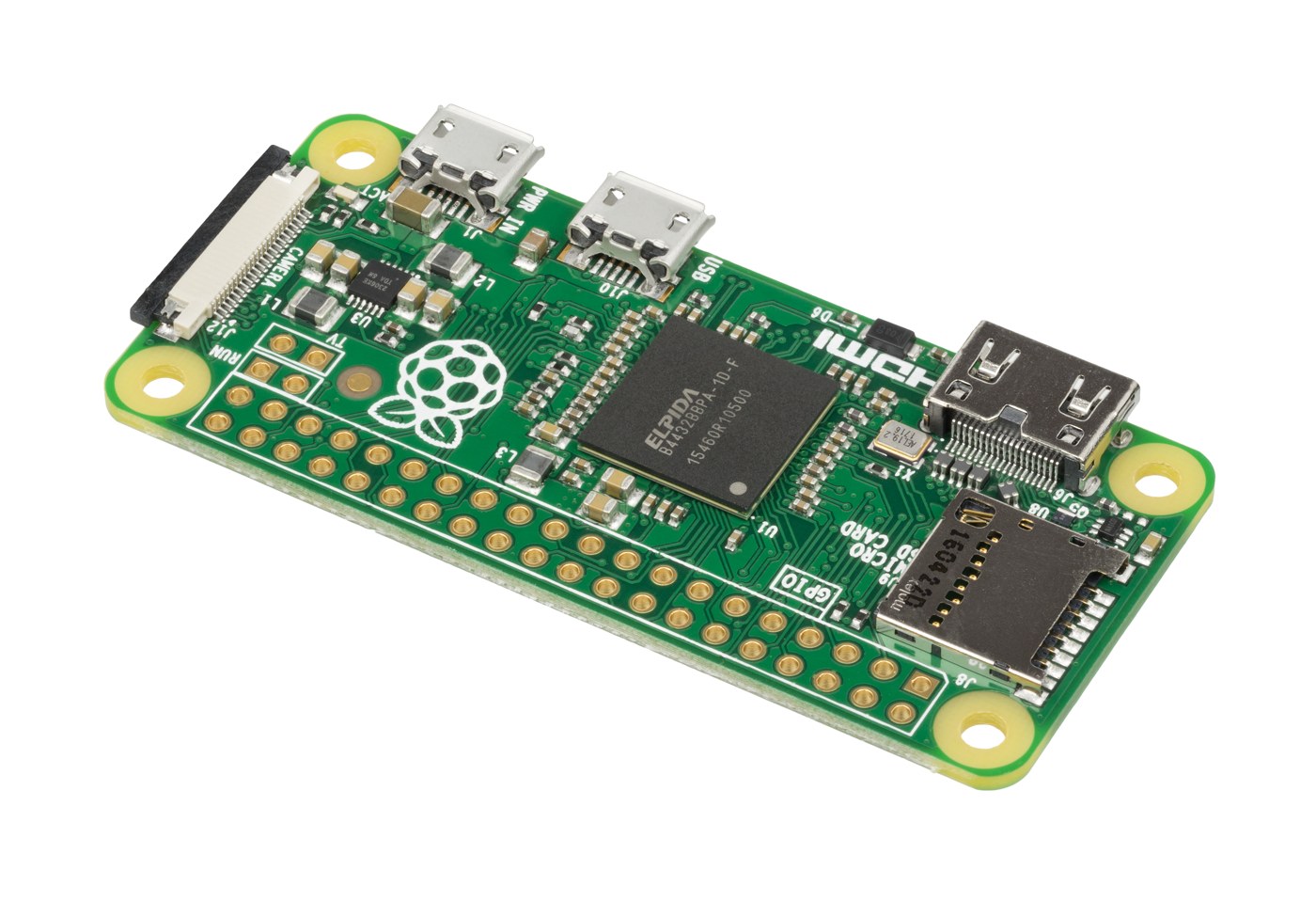
An industrial panel can outgrow a small application processor without needing the largest board in the catalogue. An RK3576 industrial SBC is worth evaluating when the product combines a substantial interface, local processing, and several connected devices.
First, get the processor description right: RK3576 has eight application CPU cores, comprising four Cortex-A72 cores and four Cortex-A53 cores. Its advertised 6-TOPS INT8 NPU figure has a sparsity qualification in the brief datasheet. Neither core count nor TOPS establishes the performance of a finished system.
The practical question is whether a particular board, BSP, and enclosure can keep your workload inside its response limits. This is an evaluation guide, not an industrial qualification report or a set of measured Silicore results.
Look for workloads with a clear reason to move up
A useful candidate application combines tasks that a smaller platform struggles to perform concurrently: visual interaction, local protocol handling, image processing, and data storage. Define which task currently misses its deadline and what improvement the next board must deliver.
For a camera-assisted HMI, the operator may need a current image and a timely inspection result while the system logs production records. The requirement concerns the age of that result, screen response, and data integrity. Processor utilization alone cannot capture those outcomes.
A simple fixed-screen terminal may not benefit enough to justify a larger platform. Before upgrading, check whether oversized image assets, blocking database calls, or unnecessary background services are responsible for poor response.
Use the RK3576 vs RK3588 comparison when both platforms remain plausible. Compare a controlled application rather than substituting unrelated demonstration programs for the product workload.
Treat NPU support as a software integration task
An NPU is useful when the intended model converts, runs with acceptable accuracy, and fits the system’s latency and memory limits. A framework name in a processor brochure is not a guarantee that an arbitrary model can be deployed unchanged.
Begin with the trained model and its preprocessing specification. Record input dimensions, channel order, normalization, output interpretation, and the reference accuracy metric. Then convert using a toolkit release supported by the target runtime and driver.
Use representative validation data, including lighting changes, unusual orientations, and difficult examples that matter to the application. A small calibration set containing only clean demonstration images can hide problems that later appear on the production line.
Measure the full path from acquisition to usable result. Unsupported operations, buffer copies, and postprocessing can occupy the CPU even when inference executes on the NPU. Record those costs before deciding how many streams or models the board can support.
Verify industrial interfaces beyond the connector count
RK3576’s brief includes dual RGMII interfaces and CAN FD capabilities. On a complete SBC, PHYs, transceivers, connectors, protection, and driver support determine what you can actually use.
Ask how the two network ports connect to the processor and whether both operate concurrently on the delivered image. For CAN, verify the transceiver, supported electrical layer, termination arrangement, and software API. A logic-level header is not a protected fieldbus port.
If RS485 is required, identify the UART, external transceiver, direction control, and isolation strategy. Include turnaround timing and bus recovery in the application test. Do not assume that every serial header implements the same electrical interface.
A project involving CAN and RS485 should define its fault boundaries early. Industrial connectors and an extended-temperature processor do not replace system-level EMC, safety, or reliability validation.
Make the panel a controlled part of the design
Select an exact display and touch assembly before approving the board. Record the panel interface, power rails, timing, brightness control, cable length, and initialization sequence. A generic statement of MIPI support is not a panel integration plan.
Confirm whether each required screen carries independent content or mirrors another output. Include the external service monitor if it must operate while the machine interface remains active.
Touch integration needs its own tests. Check behavior during startup, communication load, electromagnetic disturbance, and suspend or resume. Operator input should recover predictably after a controller reset or a temporary disconnection.
The enclosure can change both display and processor behavior. Backlight heat, nearby regulators, and the thermal path through the mounting plate affect the complete assembly. Evaluate with the production panel installed rather than a small laboratory monitor.
Industrial readiness needs evidence
| Review item | Evidence worth requesting |
|---|---|
| Temperature claim | Limits for the complete board and a documented test configuration |
| Component consistency | Approved BOM, substitutions policy, revision control |
| Software support | Reproducible build, driver sources, maintenance responsibilities |
| Field recovery | Tested image restore and interrupted-update procedures |
| Production testing | Traceability, functional coverage, failure disposition |
The industrial-grade SBC label should lead to questions, not end them. A temperature range for one component does not establish the range of connectors, memory, storage, power conversion, or the finished product.
Request records that identify what was tested and under which conditions. A screenshot showing a temperature reading gives less assurance than a controlled test report with workload, ambient conditions, duration, sample identification, and acceptance criteria.
Keep Android and Linux choices concrete
Choose the operating system from application dependencies and maintenance capability. An Android UI may simplify an existing application port, while Linux may fit a gateway service stack more naturally. Both require working drivers and a support plan.
Ask the supplier to rebuild the selected image from a clean environment. Verify the kernel, bootloader, firmware, and application interfaces delivered with that build. Document any components that cannot be rebuilt and who supplies their updates.
Security maintenance must cover the whole image. Define who evaluates vulnerabilities, integrates fixes, signs releases, and restores equipment after a failed update. A future operating-system upgrade should be treated as a scoped engineering project unless support is explicitly contracted.
Release only after sustained operation
A local watchdog cannot distinguish every external outage from an internal fault without an explicit health policy. For example, loss of the upstream broker should not cause an endless reboot loop if local acquisition remains healthy. Define service deadlines, stale-data limits, retry intervals, and escalation behavior independently. Then test a prolonged external outage as well as an intentionally stopped application service.
Run the intended workload in the intended enclosure until temperatures and performance stabilize. Log application deadlines, dropped inputs, memory pressure, storage errors, and link recovery alongside thermal readings.
Include negative cases: disconnect a cable, interrupt an approved update test, fill the data partition within the defined limits, and restart after an unexpected power loss. Define safe recovery behavior before running those tests.
Choose RK3576 when it closes a demonstrated capability gap while meeting the product’s electrical, mechanical, software, and supply requirements. Keep the release decision attached to a specific configuration and evidence package.
Technical basis: Rockchip RK3576 Brief Datasheet V1.2 and RKNN deployment documentation.