
NXP i.MX vs Rockchip: Which SoC Is Better for Long-Life Industrial Products?
Compare NXP i.MX vs Rockchip for long-life industrial embedded products. Learn how to evaluate lifecycle, performance, BSP support, industrial interfaces, display capability, cost, and product risk.
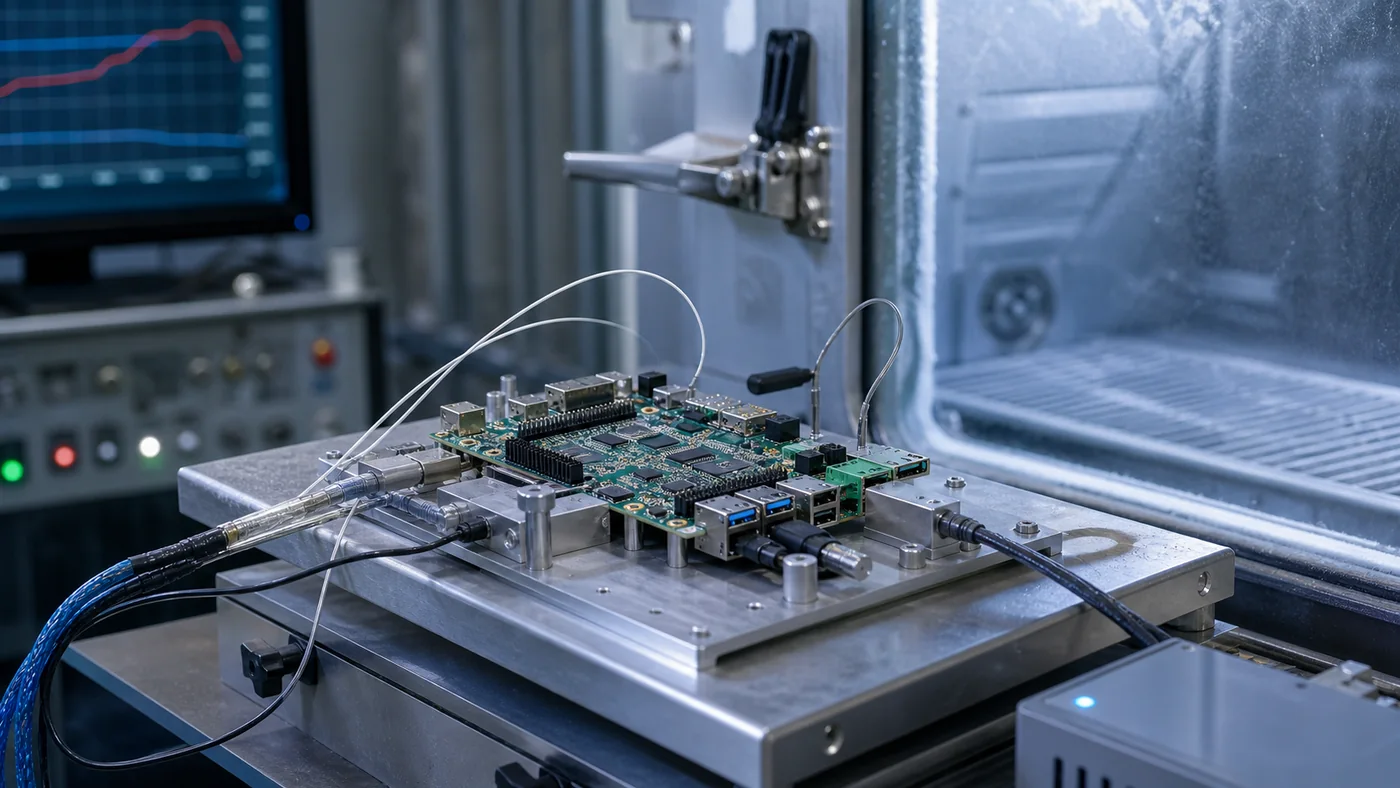
Choosing between NXP i.MX and Rockchip is a common question for industrial embedded products. Both SoC families can power Android SBCs, Linux SBCs, HMI panels, gateways, medical terminals, smart home devices, and custom embedded boards. Both have strengths. The right choice depends on product lifecycle, performance needs, software stack, interface requirements, cost target, and supplier support.
The comparison is often oversimplified. Some engineers see NXP as the safer industrial option and Rockchip as the higher-performance Android option. That general impression has some truth, but real product decisions require more detail. A well-supported Rockchip board can be reliable in industrial use. A poorly integrated NXP design can still fail. The SoC family is only one part of the platform.
This article compares NXP i.MX and Rockchip from the perspective of long-life industrial products.
What Long-Life Industrial Products Need
Long-life products are different from consumer devices. A consumer product may be replaced in two or three years. Industrial products may need five, seven, or ten years of availability, with stable hardware revisions, field serviceability, and predictable software maintenance.
Long-life products often require:
- Stable component supply
- Clear revision control
- Mature BSP support
- Long-term kernel and OS strategy
- Industrial interfaces
- Thermal reliability
- Documentation
- Production test process
- Controlled firmware updates
- Compatibility across product variants
The SoC should be evaluated against these practical requirements, not only against benchmark performance.
NXP i.MX Strengths
NXP i.MX processors are widely used in industrial and automotive-adjacent embedded products. Their strengths often include lifecycle planning, documentation, industrial positioning, and ecosystem support. Many engineers choose NXP when the product has strict lifecycle expectations or when the customer values platform continuity.
NXP can be a strong fit for:
- Industrial controllers
- Medical equipment interfaces
- HMI panels with long support needs
- Gateways
- Transportation and energy systems
- Products with strict documentation requirements
- Linux-first embedded systems
NXP platforms often pair well with Yocto-based Linux systems. Android is also possible, depending on board vendor and BSP support, but NXP is especially attractive when the team needs predictable embedded Linux control.
Rockchip Strengths
Rockchip SoCs are popular in Android SBCs, display products, smart terminals, and multimedia-rich devices. They often provide strong performance per cost, good graphics and video capability, and broad use in Android-based embedded products.
Rockchip can be a strong fit for:
- Android HMI panels
- Smart home control panels
- Retail terminals
- Kiosks
- Digital signage
- Edge AI devices
- Multimedia products
- Cost-performance-sensitive embedded systems
For Android products that need responsive UI, video playback, high-resolution displays, Wi-Fi/Bluetooth, and application-level development, Rockchip platforms are often practical and competitive.
Lifecycle and Supply
Lifecycle is one of the biggest differences. NXP is generally known for stronger formal lifecycle positioning. This can be important when customers require long availability commitments or when product certification makes redesign expensive.
Rockchip can still be used in long-life products, but the product team should verify supply strategy with the board supplier. Ask about SoC availability, memory alternatives, wireless module lifecycle, power IC alternatives, and board revision policy.
For either platform, lifecycle risk is not only the SoC. Displays, eMMC, Wi-Fi modules, connectors, PMICs, and touch controllers can also change. A strong supplier should manage the whole bill of materials, not just the processor.
Performance and Multimedia
Rockchip often provides strong performance and multimedia capability for the cost. RK3568 and RK3588-based boards are common in Android HMI, smart terminals, edge devices, and display products. RK3588 especially provides strong CPU, GPU, video, and AI capability.
NXP i.MX platforms may not always match Rockchip on raw Android multimedia performance at the same cost level, but they can be excellent for reliable embedded workloads, industrial communication, and Linux-based applications.
The key question is workload:
- If the product needs rich Android UI, video, high-resolution display, or AI, Rockchip may be attractive.
- If the product needs long lifecycle, controlled Linux stack, and industrial documentation, NXP may be attractive.
- If the product needs both, board-level support becomes the deciding factor.
Android and Linux Support
Rockchip is widely used in Android SBC products. Many vendors provide Android BSPs with display, touch, Wi-Fi, Bluetooth, camera, and multimedia support. Quality varies by supplier, so source access and customization support must be confirmed.
NXP is strong in embedded Linux and Yocto ecosystems. This can be valuable for teams that want a controlled Linux distribution, long-term maintenance strategy, and direct system customization.
Android on NXP can work well when the vendor provides a stable BSP, but teams should verify Android version, display support, hardware acceleration, OTA strategy, and application access to industrial I/O.
Industrial Interfaces
Both NXP and Rockchip can support industrial interfaces depending on board design. Do not assume the SoC family guarantees the final interface set.
Evaluate:
- Ethernet count and quality
- CAN support
- RS485 design
- UART availability
- GPIO voltage and protection
- USB host stability
- Display interface
- Camera interface
- Power input range
- Isolation requirements
An NXP board designed for consumer multimedia may be less useful than a Rockchip board designed for industrial I/O. A Rockchip board without proper protection may be less suitable than an NXP industrial module. Board design matters.
Cost Structure
Rockchip platforms are often attractive when cost-performance matters. For commercial HMI, smart home panels, and display terminals, Rockchip can provide strong Android performance within a competitive BOM.
NXP may cost more in some configurations, but the value may be justified by lifecycle expectations, documentation, ecosystem, and customer requirements.
Cost should include engineering cost, not only hardware cost. A cheaper board that requires months of BSP debugging is not cheap. A more expensive board with stable support may reduce total project risk.
Decision Table
| Requirement | Often favors |
|---|---|
| Formal long lifecycle | NXP i.MX |
| Android HMI cost-performance | Rockchip |
| Rich multimedia | Rockchip |
| Yocto/Linux control | NXP i.MX |
| Edge AI performance | Rockchip RK3588 class |
| Strict industrial documentation | NXP i.MX |
| Smart home display panels | Rockchip |
| Medical/industrial long availability | Often NXP, depending on supplier |
| Lower BOM target | Often Rockchip |
Supplier Support Is the Real Deciding Factor
The SoC is important, but the supplier determines whether the platform becomes a product. A good supplier provides schematics guidance, BSP source, driver support, display integration, production tools, lifecycle planning, and responsive engineering support.
For products using custom displays, touch panels, and embedded boards, coordination with a display and embedded partner can reduce integration risk, especially when the product needs a complete hardware stack rather than a loose development board.
Conclusion
NXP i.MX and Rockchip are both valid choices for long-life industrial products, but they serve different priorities. NXP is often strong when lifecycle, documentation, Linux control, and industrial positioning are top concerns. Rockchip is often strong when Android performance, display capability, multimedia, AI, and cost-performance matter.
The right choice depends on the product workload, lifecycle expectation, software team, display requirements, industrial interfaces, cost target, and supplier support. Choose the platform that reduces the hardest product risk, not the one that wins a generic comparison.
Frequently Asked Questions
Is NXP i.MX better than Rockchip for industrial products?
NXP i.MX is often preferred when long lifecycle, documentation, and industrial positioning are top priorities. Rockchip is often preferred when multimedia performance, Android cost-performance, and broad display products are more important.
Can Rockchip be used in industrial products?
Yes. Rockchip can be used successfully in industrial products when the board design, BSP support, thermal validation, and supply planning are handled properly.
Which is better for Android HMI?
Rockchip is frequently strong for Android HMI because of performance and multimedia support, while NXP can be attractive for long-lifecycle industrial products where documentation and stable platform planning matter.